Preserving Family Memories for Future Generations
Why family stories disappear within a few generations — and practical steps you can take today to preserve your family history for those who come after you.
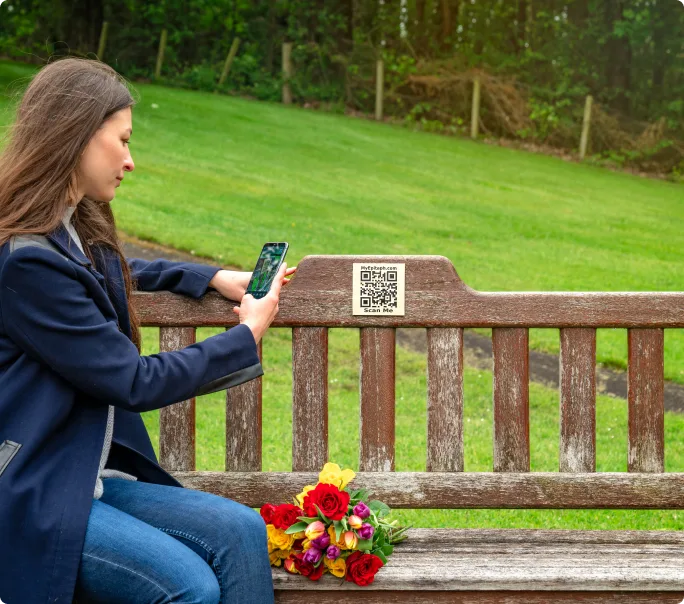
Most of us know our parents’ stories well. We have a reasonable picture of our grandparents’ lives. But ask about a great-grandparent — their personality, their daily routines, the things that made them laugh — and the details become sparse. Go back one generation further and, for many families, the trail goes cold entirely.
Research consistently shows that family memories tend to fade within two to three generations unless deliberate steps are taken to preserve them. The stories, photographs, and personal details that feel so vivid today can slip away quietly, leaving future generations with little more than a name and a pair of dates.
The good news is that preserving these memories has never been more achievable. It simply requires a little intention.
Why Family Stories Matter
Family stories are not just sentimental keepsakes. They serve a real purpose.
They shape identity. Knowing where you come from — the struggles your family overcame, the values they held, the places they called home — gives you a sense of rootedness. Studies have found that children who know their family history tend to have a stronger sense of self and greater emotional resilience.
They connect generations. A grandchild who can read about their great-grandmother’s childhood in wartime Glasgow, or watch a video of their grandfather describing his first job, feels a bond that transcends time. These connections matter, especially as families become more geographically scattered.
They preserve cultural heritage. Every family carries its own traditions, phrases, recipes, and ways of doing things. When these are not recorded, they disappear — and with them, a small piece of cultural history.
Practical Steps to Preserve Your Family Memories
You do not need expensive equipment or specialist skills. Here are some straightforward approaches that anyone can start with today.
Record Conversations with Older Relatives
This is perhaps the single most valuable thing you can do. Sit down with a parent, grandparent, aunt, or uncle and ask them to tell you about their life. You can record the conversation on a smartphone — the audio quality will be more than sufficient.
Some questions to get started:
- Where did you grow up, and what was it like?
- What do you remember about your parents and grandparents?
- What was your first job?
- How did you meet your partner?
- What is your happiest memory?
- Is there anything you wish you had done differently?
People often say they do not have interesting stories to tell. They are almost always wrong. The everyday details of life in a different era — the food, the work, the social customs — are precisely what future generations will find most fascinating.
Digitise Old Photographs
Physical photographs are vulnerable. They fade, they get damaged by water or sunlight, and they are often stored in boxes that only one family member knows about. Digitising them ensures they survive.
You can use a flatbed scanner for the best quality, but a smartphone camera in good natural light produces surprisingly good results. There are also dedicated scanning apps that automatically crop, straighten, and enhance old prints.
As you scan, take the time to label each photograph — who is in it, when it was taken, and where. This context is easily lost. A photograph of an unidentified person in an unlabelled location has far less value than one captioned “Grandad and Uncle Jim, Largs, summer 1958.”
Gather and Organise Documents
Birth certificates, marriage certificates, military records, old letters, school reports, newspaper cuttings — these documents tell parts of a family’s story that photographs cannot. If they exist in physical form, scan them. If they are already digital, back them up in more than one place.
Consider creating a simple folder structure organised by family member or generation, so that anyone who inherits the archive can navigate it easily.
Record Video
If an older relative is willing, a short video recording can be extraordinarily powerful. There is something irreplaceable about seeing someone’s face as they tell a story — their expressions, their gestures, the way their eyes light up when they recall a happy memory.
It does not need to be a formal production. A ten-minute recording on a phone, with good lighting and minimal background noise, is more than enough. Future generations will treasure it.
How Digital Tools Are Changing Memory Preservation
In the past, preserving family history was largely the domain of dedicated genealogists and local historians. Today, digital tools have made it accessible to everyone.
Online family trees allow you to map relationships across many generations and attach photographs, documents, and stories to individual people. Tools like digital epitaphs extend this idea further, creating rich online tributes that go far beyond a name and a pair of dates. Cloud storage means your archive is not dependent on a single hard drive or a box in the attic. And dedicated memorial platforms bring together all of these elements — biography, photographs, timeline, family connections — into a single, lasting page that anyone in the family can visit.
The shift from physical to digital preservation solves several problems at once. Digital records do not degrade over time. They can be accessed from anywhere in the world. They can be shared instantly with family members. And they can be updated as new information surfaces — a photograph discovered in a drawer, a story shared at a family gathering, a document unearthed from a local archive.
Memorial Pages as Family Archives
One of the most effective ways to preserve someone’s memory is to create a dedicated memorial page that serves as a permanent family archive. Unlike scattered social media posts or photographs spread across multiple devices, a memorial page brings everything together in one place — organised, searchable, and designed to last.
A well-built memorial page can include a detailed biography, a chronological timeline of key life events, a gallery of photographs and videos, and connections to other family members. Our guide on how to create a digital memorial walks through the process step by step. Over time, it becomes not just a tribute to one person, but a node in a wider family history — linking generations and preserving stories that might otherwise be lost.
The families who get the most value from these pages are often the ones who treat them as ongoing projects rather than one-off tasks. A memorial page created today can be enriched next month when a cousin finds an old photograph, and again next year when a grandchild records a memory they want to add.
Start Today
The best time to begin preserving your family’s memories is now — while the people who hold those stories are still here to share them. It does not require a grand project or a significant investment of time. A single recorded conversation, a box of photographs scanned over a weekend, or a few pages of biography written from memory can make an enormous difference to what future generations will know about the people who came before them.
MyEpitaph provides a thoughtful space to gather and preserve these memories, creating lasting memorial pages that keep your family’s stories alive for generations to come.
For a comprehensive overview of everything covered here and more, see our complete guide to digital memorials.
Create a lasting memorial
Honour someone you love with a beautiful online memorial page — with photos, stories, and a space for family and friends to share their memories.