Poems for Funerals and Memorials
A collection of beautiful poems often read at funerals, memorial services, and celebrations of life.
Poetry has a way of expressing what we struggle to put into words. These poems have brought comfort to countless families at funerals, memorial services, and quiet moments of remembrance. Whether you are planning a service or simply looking for words that feel right, we hope you find solace here.
”In Losing You” — Winifred M. Letts (1882–1972)
In losing you I lost my sun and moon And all the stars that blessed my lonely night. I lost the hope of Spring, the joy of June, The Autumn’s peace, the Winter’s firelight.
I lost the zest of living, the sweet sense Expectant of your step, your smile, your kiss; I lost all hope and fear and keen suspense For this cold calm, sans agony, sans bliss.
I lost the rainbow’s gold, the silver key That gave me freedom of my town of dreams; I lost the path that leads to Faërie By beechen glades and heron-haunted streams.
I lost the master word, dear love, the clue That threads the maze of life when I lost you.
”Do Not Stand at My Grave and Weep” — Mary Elizabeth Frye (1905–2004)
Do not stand at my grave and weep. I am not there; I do not sleep. I am a thousand winds that blow. I am the diamond glints on snow. I am the sunlight on ripened grain. I am the gentle autumn rain.
When you awaken in the morning’s hush I am the swift uplifting rush Of quiet birds in circled flight. I am the soft stars that shine at night. Do not stand at my grave and cry; I am not there; I did not die.
”Death Is Nothing at All” — Henry Scott-Holland (1847–1918)
Death is nothing at all. It does not count. I have only slipped away into the next room. Nothing has happened.
Everything remains exactly as it was. I am I, and you are you, and the old life that we lived so fondly together is untouched, unchanged. Whatever we were to each other, that we are still.
Call me by the old familiar name. Speak of me in the easy way which you always used. Put no difference into your tone. Wear no forced air of solemnity or sorrow.
Laugh as we always laughed at the little jokes that we enjoyed together. Play, smile, think of me, pray for me. Let my name be ever the household word that it always was. Let it be spoken without an effort, without the ghost of a shadow upon it.
Life means all that it ever meant. It is the same as it ever was. There is absolute and unbroken continuity. What is this death but a negligible accident?
Why should I be out of mind because I am out of sight? I am but waiting for you, for an interval, somewhere very near, just round the corner.
All is well. Nothing is hurt; nothing is lost. One brief moment and all will be as it was before. How we shall laugh at the trouble of parting when we meet again!
”She Is Gone” — David Harkins (1958–)
You can shed tears that she is gone, or you can smile because she has lived. You can close your eyes and pray that she’ll come back, or you can open your eyes and see all she’s left.
Your heart can be empty because you can’t see her, or you can be full of the love you shared. You can turn your back on tomorrow and live yesterday, or you can be happy for tomorrow because of yesterday.
You can remember her only that she is gone, or you can cherish her memory and let it live on. You can cry and close your mind, be empty and turn your back. Or you can do what she’d want: smile, open your eyes, love and go on.
”The Life That I Have” — Leo Marks
The life that I have Is all that I have And the life that I have Is yours.
The love that I have Of the life that I have Is yours and yours and yours.
A sleep I shall have, A rest I shall have, Yet death will be but a pause.
For the peace of my years In the long green grass Will be yours and yours and yours.
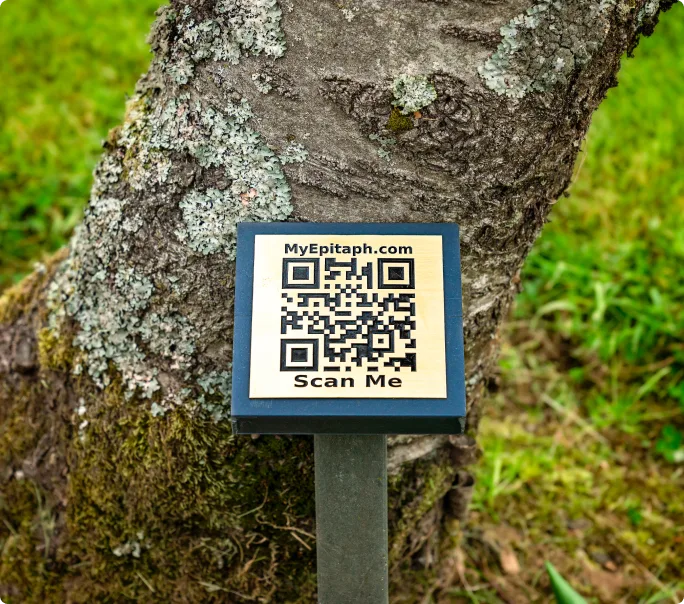
These poems can be read at a service, printed on an order of service, or included in an online memorial. With MyEpitaph, you can add meaningful words like these to your loved one’s tribute page — a lasting space for remembrance that anyone can visit.
For a comprehensive overview of everything covered here and more, see our complete guide to digital memorials.
Create a lasting memorial
Honour someone you love with a beautiful online memorial page — with photos, stories, and a space for family and friends to share their memories.